

Brief information Stox Pips
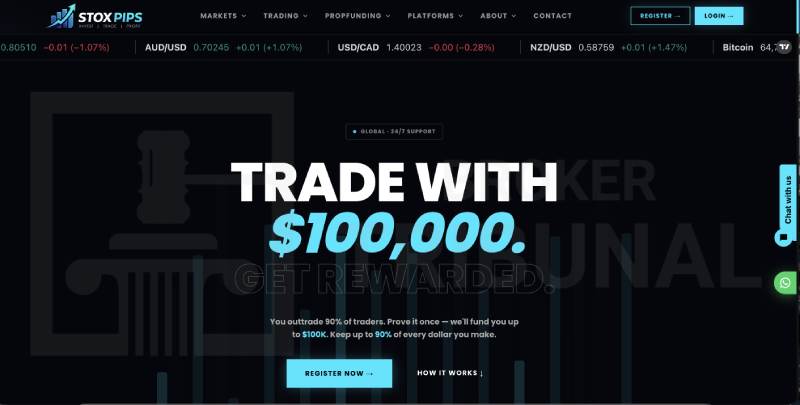
The company Stox Pips presents itself as an online trading platform offering access to financial markets through its proprietary web terminal.
The website provides a Certificate of Incorporation for Stox Pips Limited, registered in Saint Lucia on February 9, 2026. However, no license authorizing the company to provide brokerage or investment services is published.
The project operates via the domains:
stoxpips.com
secure.stoxpips.com
Users can register an account, manage their portfolios, and access trading services.
The email address provided is for contacting support: support@stoxpips.com.
StoxPips trading terms
StoxPips offers trading in multiple asset classes through its online platform with leveraged trading, analytical tools, and various order types. Trading conditions depend on the selected account type.
The platform supports trading in several asset classes:
forex,
cryptocurrencies,
commodities,
indices,
stocks.
Trading accounts at Stox Pips
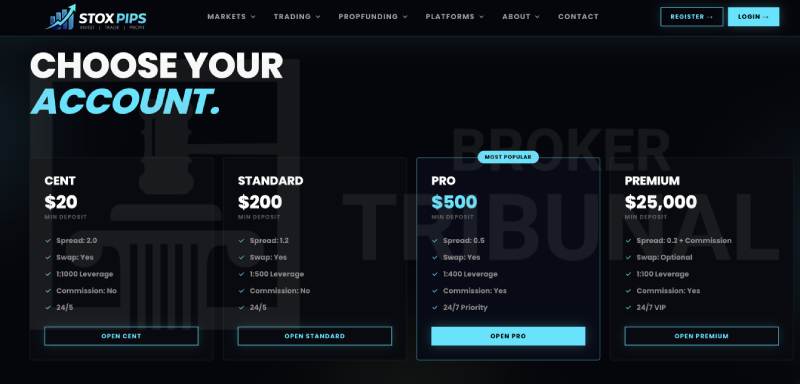
There are several accounts
Cent: from $20; spread 2.0; leverage 1:1000.
Standard: from $200; spread 1.2; leverage 1:500.
Pro: from $500; spread 0.5; leverage 1:400.
Premium: from $25000; spread 0.2 + commission; leverage 1:100.
The company also offers a demo account with virtual funds for use on the website.
Registration and personal account on stoxpips.com
To access the platform, users must register an account. The client area allows them to manage funds, verify their identity, view transaction history, and use the trading terminal.
Deposits and withdrawals with StoxPips
The platform supports deposits and withdrawals via
bank transfers,
bank cards,
e-wallets,
cryptocurrencies.
The minimum withdrawal starts from $50, while processing times range from 1 to 5 business days, depending on the payment method.
Conclusion about Stox Pips
The global company Stox Pips promotes itself as a multi-asset trading platform offering online access to global financial markets. Before opening an account or depositing funds, prospective clients should carefully review the broker's legal documentation, verify its regulatory status, examine the available trading conditions, and assess the potential risks associated with leveraged trading.